


Why Future Buyers May Care Less About Ownership Than We Do
For decades, ownership was the goal.
Not just in real estate.
In everything.
Own a house.
Own a car.
Own assets.
Ownership represented security, stability, and success.
But what if future generations see ownership differently?
Not because they can't own.
But because they may no longer need to.
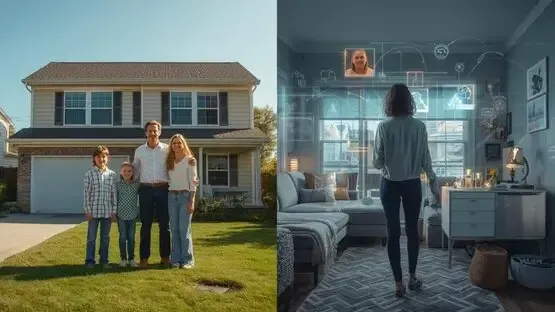
📱 A Strange Conversation in 2045
Imagine speaking to a 30-year-old buyer in 2045.
You ask:
"Do you want to own a home?"
They pause.
Then answer:
"Why would I need to?"
Not because they dislike homes.
Not because they reject investment.
But because the question itself feels outdated.
To them, the more important question might be:
"Do I have access to the lifestyle I want?"
That distinction could change the entire real estate market.
🏡 Ownership Was a Brilliant Solution
Historically, ownership solved multiple problems at once.
It provided:
- stability
- control
- wealth accumulation
- protection against uncertainty
For generations, it was one of the most effective financial decisions available.
But every solution is designed for a specific environment.
And environments change.
🌍 The World Is Becoming More Flexible
Think about how many things have already shifted:
Music
People stopped buying CDs.
They stream.
Software
People stopped buying software.
They subscribe.
Transportation
People increasingly access mobility without owning vehicles.
Work
People no longer need to be tied to one office.
A pattern emerges:
Access keeps replacing ownership.
Real estate may not be immune.
📉 Reality Check
Twenty years ago, flexibility was often viewed as uncertainty.
Today, flexibility is increasingly viewed as freedom.
That shift may be one of the most underestimated forces shaping housing demand.
🧠 The Ownership Timeline Test
Imagine two people.
Person A
Owns a property.
Lives there for 30 years.
Builds equity.
Follows a traditional path.
Person B
Moves between cities.
Works remotely.
Changes lifestyle every few years.
Invests capital elsewhere.
Uses housing as a flexible platform.
Who makes the better decision?
The answer depends entirely on the future.
And that's exactly the point.
🚪 The Rise of Access-Based Living
Future buyers may increasingly prioritize:
- flexibility
- mobility
- experiences
- optionality
Over:
- permanence
- attachment
- long-term physical ownership
Not because ownership disappears.
Because alternatives improve.
📊 The Housing Spectrum Is Expanding
For years, the market felt binary:
Traditional Model
- Rent
- Own
Today, the spectrum is expanding:
- Rent — Maximum flexibility
- Co-Living — Community + mobility
- Flexible Ownership — Balance
- Fractional Ownership — Lower entry barrier
- Traditional Ownership — Stability
- Portfolio Ownership — Wealth strategy
The number of ways people can participate in housing is increasing.
And that changes behavior.
🔮 Propertiso Future Signal
Weak Signal Today
Growing acceptance of subscription-based lifestyles.
What It Could Mean by 2035
Ownership becomes one option among many rather than the default aspiration.
Confidence Level
⭐⭐⭐⭐☆
🏙️ What Younger Buyers Are Really Optimizing For
Many assume younger generations simply cannot afford ownership.
But affordability is only part of the story.
A deeper shift may be occurring.
Future buyers increasingly optimize for:
- freedom of movement
- career adaptability
- lifestyle flexibility
- location independence
These priorities don't always align with traditional ownership models.
🧭 The New Definition of Wealth
Historically:
Wealth meant owning more things.
Increasingly:
Wealth may mean having more options.
This subtle change affects everything.
Including housing.
⚖️ Ownership vs Adaptability
For years, the conversation was:
"Should I buy or rent?"
A more interesting question is emerging:
"How adaptable is my housing strategy?"
Because ownership and adaptability are not always the same thing.
Sometimes they align.
Sometimes they compete.
📈 A Shift Already Underway
Across the world, we can already observe signals of change:
- digital nomad visas
- co-living communities
- remote work migration
- fractional ownership models
- subscription-based living concepts
Each trend appears different on the surface.
But together they point in the same direction:
People increasingly value access over permanence.
📊 Propertiso Insight Index (CIS) — Ownership Transition
🔴 High CIS (Emotional Market)
- ownership remains strongly linked to status
- buyers prioritize identity and permanence
- traditional ownership dominates
🟡 Medium CIS
- flexibility enters the conversation
- hybrid models gain traction
- ownership becomes more strategic
🟢 Low CIS (Rational Market)
- adaptability becomes valuable
- access competes directly with ownership
- housing becomes a tool rather than a destination
🔍 A Different Lens for Real Estate
Most discussions focus on:
- prices
- mortgages
- interest rates
Important topics.
But perhaps the more interesting question is:
What role should housing play in a person's life?
The answer is becoming less universal.
And more personal.
🌐 Related Reading
If you're interested in how housing and lifestyle are evolving, explore:
📍A Question Worth Asking
Imagine your ideal life in ten years.
Now ask yourself:
Does that vision require ownership?
Or does it simply require access to the right opportunities at the right time?
Those are not the same thing.
And future buyers may understand that difference better than we do.
🚀 Looking Ahead
The next generation may still buy homes.
They may still invest in property.
They may still build wealth through real estate.
But they may approach ownership differently.
Less as a destination.
More as a tool.
And that small shift in perspective could become one of the most important real estate stories of the next decade.
Push notifications are not supported in this browser.