


The Future of Housing: Can Capsule Homes Solve the Affordability Crisis?
Exploring the potential of modular housing, prefabrication, and smart design in a world facing growing housing shortages.
The global housing market is under unprecedented pressure. In many major cities around the world, home prices have outpaced income growth for decades, creating a structural affordability gap that is now affecting not only low-income households but also middle-class buyers. At the same time, urban populations continue to grow, land availability in desirable locations is shrinking, and construction costs are rising due to labour shortages, material inflation, and stricter environmental regulations. In this environment, traditional housing models are struggling to meet demand. This has led to increasing interest in alternative solutions such as modular housing, prefabricated construction, and most notably capsule homes — compact, factory-built living units designed for efficiency, affordability, and scalability. The key question is no longer whether housing needs to change, but whether emerging models like capsule homes can realistically address the affordability crisis.
Understanding the Global Housing Affordability Crisis
The housing affordability crisis is not a single-market issue. It is a global structural problem driven by several interconnected factors.
Rising Property Prices
In cities such as London, New York, Toronto, Sydney, and Hong Kong, property prices have grown significantly faster than wages over the past two decades. This has made traditional homeownership increasingly inaccessible.
Limited Urban Land
As cities expand, available land becomes scarce and more expensive. This forces development toward vertical construction or smaller units with higher density.
Construction Cost Inflation
Construction costs have increased due to:
- Labour shortages in the building sector
- Rising material costs (steel, concrete, timber)
- Energy price volatility
- Supply chain disruptions
Regulatory Complexity
Modern building standards, sustainability requirements, and zoning regulations, while necessary, also increase time and cost for developers.
The result is a market where demand far exceeds affordable supply.
What Are Capsule Homes?
Capsule homes are compact, self-contained living units designed with efficiency and modularity in mind. Unlike traditional homes built entirely on-site, capsule homes are typically manufactured in controlled environments and then transported or assembled on location. They are characterized by:
- Compact floor plans
- Modular construction systems
- Efficient use of space
- Smart interior layouts
- Integration of modern technologies
Rather than focusing on size, capsule homes prioritize functionality and usability. A well-designed capsule home can include:
- A sleeping area
- A compact kitchen
- A bathroom
- Storage solutions
- Smart home systems
- Climate control
Despite their small footprint, they are designed to maintain comfort and livability through intelligent design.
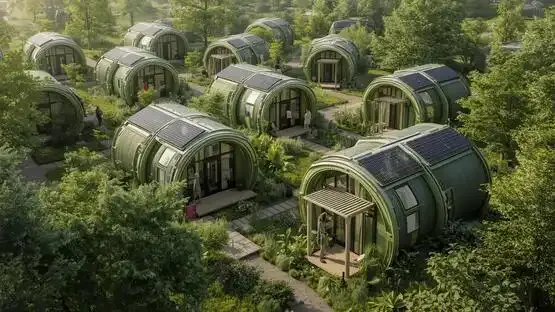
Why Capsule Homes Are Gaining Attention
Capsule homes are not just an architectural curiosity. They are gaining traction because they directly respond to several systemic housing problems.
1. Speed of Construction
Traditional homes can take months or even years to complete. Capsule homes, being prefabricated, can be produced and installed significantly faster. This speed is crucial in markets facing urgent housing shortages.
2. Lower Construction Costs
Factory-based production allows for:
- Bulk material efficiency
- Reduced labour dependency
- Less waste
- Standardized production processes
This can significantly reduce overall housing costs.
3. Scalability
Capsule housing models can be replicated at scale much more efficiently than traditional housing. Entire residential developments can be expanded incrementally based on demand.
4. Flexibility of Use
Capsule units can be used for:
- Permanent housing
- Student accommodation
- Rental units
- Emergency housing
- Hospitality and tourism
This versatility makes them attractive to both developers and governments.
Modular Housing and Prefabrication: The Bigger Picture
Capsule homes are part of a broader movement toward modular construction and prefabricated housing. Modular construction involves building sections of a home in a factory environment and assembling them on-site. This approach offers several structural advantages:
- Improved quality control
- Reduced weather delays
- Predictable timelines
- Lower environmental impact
Prefabrication also enables more efficient use of materials, reducing waste compared to traditional construction. In many ways, capsule homes represent the most compact and optimized expression of modular housing principles.
Can Capsule Homes Actually Solve the Affordability Crisis?
This is where the discussion becomes more complex. Capsule homes can contribute to affordability, but they are unlikely to be a complete solution on their own.
What They CAN Do
Capsule homes can:
- Reduce entry-level housing costs
- Increase housing supply faster
- Provide flexible housing options in cities
- Support temporary or transitional housing needs
- Improve housing accessibility in high-cost regions
What They CANNOT Fully Solve
However, capsule homes cannot fully address:
- Land price inflation in major cities
- Structural income inequality
- Zoning and planning restrictions
- Cultural expectations around housing size
- Long-term family housing needs at scale
In other words, capsule homes are part of the solution, not the entire solution.
Urban Density and the Role of Compact Living
As cities continue to grow, compact housing is becoming a natural outcome of urban density. Instead of expanding horizontally, cities are increasingly growing vertically and inwardly. This leads to:
- Smaller residential units
- More efficient land use
- Higher-density developments
- Mixed-use buildings
Capsule homes and similar micro-living concepts fit naturally into this model, particularly in:
- High-cost urban centres
- University districts
- Transit-oriented developments
- Temporary housing zones
The Role of Technology in Making Small Spaces Livable
One of the most important enablers of capsule housing is technology. Modern compact homes rely heavily on smart systems to maintain comfort and functionality.
Smart Home Integration
- Automated lighting
- Climate control systems
- Energy monitoring
- Security systems
Space Optimization Technology
- Foldable furniture
- Multi-purpose rooms
- Built-in storage systems
- Transformable layouts
These innovations allow smaller spaces to feel significantly larger and more functional than their physical size suggests.
Sustainability and Environmental Impact
Capsule homes also align with growing sustainability goals. Smaller homes typically require:
- Less energy for heating and cooling
- Fewer construction materials
- Reduced land usage
- Lower carbon emissions over their lifecycle
In addition, modular production methods often generate less waste than traditional construction. This makes capsule housing attractive not only economically but also environmentally.
As governments introduce stricter climate policies, sustainable housing solutions are expected to become increasingly important.
Challenges Facing Capsule Housing
Despite their potential, capsule homes face several important challenges.
1. Regulation and Zoning
Many cities do not yet have clear regulatory frameworks for ultra-compact or modular housing.
2. Public Perception
Some consumers still associate smaller homes with lower quality or temporary living.
3. Financing Models
Traditional mortgage systems are not always designed for non-standard housing formats.
4. Infrastructure Requirements
Even compact housing developments require roads, utilities, and services.
5. Long-Term Livability Questions
While capsule homes work well for individuals and short-term use, their suitability for long-term family living is still debated.
The Future of Housing: A Hybrid Model
The future of housing is unlikely to be dominated by a single solution. Instead, a hybrid ecosystem is emerging, combining:
- Traditional housing
- Modular construction
- Capsule homes
- Co-living developments
- Smart urban apartments
Each model serves different demographic and economic needs.
Capsule homes are likely to play a key role in this ecosystem, particularly in addressing:
- Housing shortages
- Urban affordability pressures
- Flexible living requirements
- Temporary and transitional housing demand
The global housing affordability crisis is one of the most pressing challenges of modern urban life. Rising costs, limited land availability, and changing demographics are forcing a fundamental rethink of how housing is designed and delivered. Capsule homes, along with broader modular and prefabricated construction methods, offer a promising response to some of these challenges. However, they are not a standalone solution. Instead, they represent an important part of a broader shift toward more efficient, flexible, and sustainable housing systems. The future of housing will likely be defined not by size, but by adaptability, efficiency, and innovation — and capsule homes are firmly part of that transformation.