


After a decade of uneven attention from global investors, Central and Eastern Europe is re-emerging in 2026 as one of the most compelling real estate growth regions in Europe.
Unlike the highly saturated and increasingly affordability-constrained markets of Western Europe, many Eastern European cities offer a combination of lower entry prices, improving economic fundamentals, rising incomes, and expanding infrastructure. These factors are converging to create a new wave of demand from both domestic buyers and international investors.
This comeback is not driven by speculative hype. It is quieter, more structural, and increasingly supported by long-term trends such as economic convergence, urbanization, and yield-driven capital allocation.
This report explores why Eastern Europe is regaining relevance, which markets are leading the shift, and what risks and opportunities define the region in 2026.
1. From Periphery to Strategic Growth Region
For many years, Eastern Europe was perceived as a secondary tier in the European real estate landscape. While cities like Prague and Warsaw attracted some institutional interest, much of the region remained underrepresented in global investment portfolios.
This perception is changing.
By 2026, several structural factors are redefining the region’s role:
- Strong GDP growth relative to Western Europe
- Increasing wage convergence
- Expanding middle class
- Improved political and financial stability in key markets
- Integration with broader European economic systems
These developments are gradually shifting Eastern Europe from a peripheral consideration to a strategic growth region.
2. Affordability as a Competitive Advantage
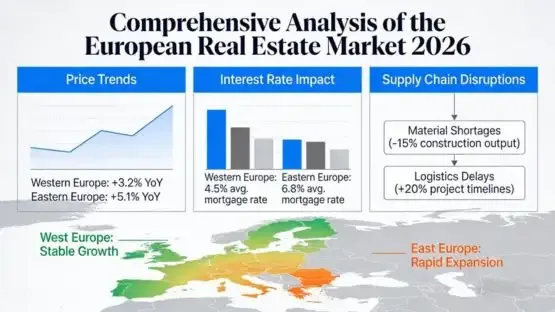
One of the most important drivers of the region’s comeback is affordability.
Compared to major Western European cities, property prices in Eastern Europe remain significantly lower on both absolute and relative (price-to-income) bases.
This creates multiple advantages:
- Higher accessibility for domestic buyers
- Greater upside potential for capital appreciation
- Stronger rental yield profiles for investors
In a post-boom environment where capital efficiency matters more than speculative growth, these characteristics are increasingly attractive.
Affordability is not just a short-term advantage. It is a structural differentiator that supports long-term demand.
3. Yield Differentials and Investor Repositioning
As yields in Western European core markets have compressed, investors have begun to search for higher-return opportunities.
Eastern Europe offers:
- Higher gross rental yields
- Lower acquisition costs
- Growing tenant demand
- Expanding urban populations
This yield differential is particularly important in 2026, where financing costs remain elevated and income generation is prioritized over pure capital appreciation.
Institutional investors are beginning to reallocate selectively, while private investors are entering earlier in the cycle.
4. Urbanization and Domestic Demand Growth
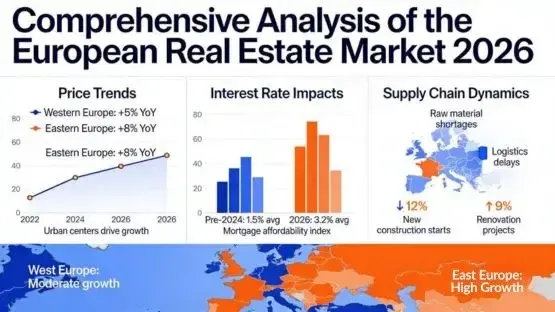
Unlike some mature Western markets, many Eastern European countries continue to experience strong urbanization trends.
Migration from rural areas to cities is increasing demand for:
- Rental housing
- Starter apartments
- Mid-market residential developments
At the same time, rising incomes and improving employment opportunities are supporting gradual expansion of homeownership.
This combination creates a dual demand structure:
- Rental demand from mobile urban populations
- Ownership demand from an emerging middle class
This structural demand base provides resilience across different market conditions.
5. Key Markets Leading the Comeback
While the region is diverse, several cities stand out as leading indicators of the broader trend.
Warsaw
Poland’s capital continues to benefit from strong economic growth, international investment, and a large domestic market. Warsaw offers a balance between liquidity, scale, and yield, making it one of the most attractive entry points in the region.
Prague
Prague remains one of the most mature markets in Central Europe, with strong tourism, limited supply, and high demand. While affordability is tightening, its stability and international appeal sustain investor interest.
Budapest
Budapest combines affordability with strong rental demand and a growing international presence. The market is more volatile than Prague or Warsaw, but offers higher upside potential.
Bucharest
Bucharest is increasingly recognized as an emerging market with strong growth dynamics. Lower price levels and improving infrastructure create significant long-term potential, particularly for early-stage investors.
6. The Role of International Capital
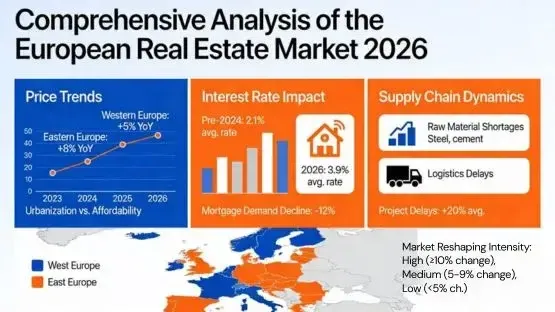
International capital flows are gradually increasing across Eastern Europe.
Investors are attracted by:
- Yield opportunities
- Economic convergence
- Diversification benefits
However, unlike previous cycles, this capital is more selective.
Rather than broad regional exposure, investors are focusing on:
- Specific cities
- Prime locations
- Rental-driven assets
- Scalable residential portfolios
This selective approach contributes to a more stable and sustainable growth trajectory.
7. Risks and Market Limitations
Despite its growing appeal, Eastern Europe is not without risk.
Liquidity remains lower than in Western European markets, which can impact exit strategies. Market transparency and data availability, while improving, are still uneven across countries.
Regulatory environments can also vary significantly, affecting development timelines and investment structures.
Currency risk is another factor in non-eurozone markets, particularly for international investors.
Finally, rapid growth in certain cities raises the risk of localized overheating if demand outpaces fundamentals.
8. Secondary Cities as the Next Layer of Growth
Beyond capital cities, secondary urban centers are beginning to attract attention.
Cities such as Kraków, Brno, Cluj-Napoca, and Sofia are benefiting from:
- Expanding tech sectors
- University-driven populations
- Lower cost of living
- Improving infrastructure
These markets offer higher growth potential, but also require more granular analysis due to lower liquidity and greater variability.
9. The Eastern Europe Growth Potential Index 2026
To assess long-term opportunity across the region, Propertiso introduces the Eastern Europe Growth Potential Index 2026 (EEGPI-26).
This index evaluates:
- Affordability gap relative to Western Europe
- Income growth trajectory
- Rental yield strength
- Urbanization rate
- Infrastructure investment
- Market liquidity
Cities with high EEGPI-26 scores represent the most attractive balance between growth potential and structural stability.
10. Strategic Implications for Market Participants
For developers, Eastern Europe offers opportunities for:
- Mid-market residential projects
- Build-to-rent developments
- Phased urban expansion strategies
For investors, the region provides:
- Yield diversification
- Early-cycle entry potential
- Exposure to economic convergence
For agencies, growing demand requires:
- Local market expertise
- Data-driven advisory
- Cross-border client acquisition strategies
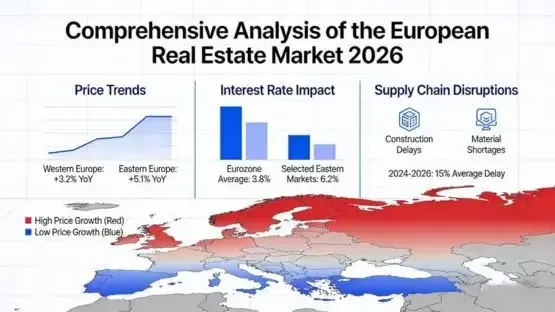
Eastern Europe’s real estate comeback in 2026 is not driven by speculation, but by structural fundamentals.
Affordability, economic growth, urbanization, and yield differentials are converging to create a new phase of market relevance.
While risks remain, the region offers a compelling alternative to saturated Western European markets.
The key advantage is timing.
As global capital gradually reallocates and domestic demand strengthens, early positioning in the right cities can deliver significant long-term benefits.
The comeback may be quiet —
but its impact is likely to be substantial.
Push notifications are not supported in this browser.