


The Rise of Capsule Homes: How Modular Living Is Reshaping Housing in 2026
From affordability challenges and off-grid living to smart communities and sustainable construction, capsule homes are transforming how people think about housing.
Housing is undergoing one of the most significant transformations in modern history. Across the world, rising property prices, urban population growth, changing lifestyles, and sustainability concerns are forcing individuals, developers, and governments to rethink what housing should look like in the future. For decades, the traditional housing model remained largely unchanged. Larger homes, lengthy construction timelines, high material consumption, and significant infrastructure requirements dominated residential development. However, today's economic and environmental realities are creating demand for alternatives that are faster, smarter, more affordable, and more sustainable.
One of the most intriguing solutions emerging from this shift is the rise of capsule homes. Once viewed as a niche concept inspired by compact urban living and futuristic architecture, capsule homes are rapidly evolving into a serious segment of the global housing market. Combining modular construction, intelligent design, sustainability principles, and advanced manufacturing techniques, these compact dwellings are attracting attention from homeowners, investors, developers, hospitality operators, and policymakers alike. As housing challenges continue to intensify worldwide, capsule homes may represent more than a temporary trend. They could become one of the defining housing solutions of the coming decades.
Why Traditional Housing Is Under Pressure
The modern housing market faces a combination of pressures rarely seen before. In many countries, home prices have risen significantly faster than wages over the past twenty years. Young professionals increasingly struggle to enter property markets, while urban land scarcity continues to push development costs higher. At the same time, construction expenses have increased due to labor shortages, supply chain disruptions, material inflation, and stricter environmental regulations. Traditional construction methods often involve:
- Long development timelines
- High labor requirements
- Significant material waste
- Extensive infrastructure costs
- Complex permitting processes
For many regions, these challenges are contributing to persistent housing shortages. The result is a growing search for alternatives that can deliver housing more efficiently while maintaining quality, comfort, and safety.
This environment has created ideal conditions for the expansion of modular housing and capsule home solutions.
The Emergence of Capsule Homes
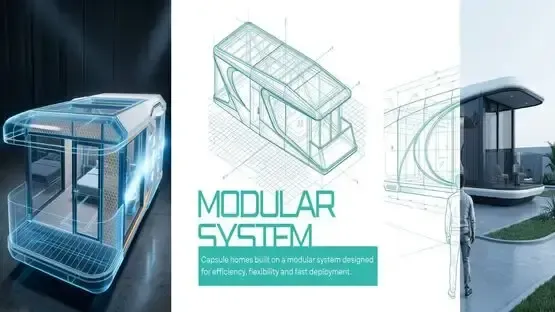
Capsule homes represent a modern interpretation of efficient living. Unlike conventional houses that are built entirely on-site, capsule homes are typically manufactured in controlled factory environments and delivered largely completed. Their compact footprint is achieved through intelligent space planning, multifunctional furniture, and highly optimized layouts. Rather than emphasizing size, capsule homes prioritize:
- Functionality
- Efficiency
- Flexibility
- Sustainability
- Smart technology integration
Advances in manufacturing have significantly improved both aesthetics and performance. Modern capsule homes often feature large windows, premium finishes, intelligent climate control systems, and contemporary architectural designs that challenge traditional assumptions about compact living. What was once considered experimental is increasingly becoming mainstream.
What Makes Modular Housing Different
Modular housing differs from traditional construction in several important ways. Instead of assembling every component on-site, modular homes are produced in specialized manufacturing facilities where quality control can be closely monitored. Construction occurs in a controlled environment that is not affected by weather delays, site disruptions, or many of the variables that slow traditional projects.
This approach offers several advantages:
Faster Construction
Factory production and site preparation can occur simultaneously, reducing overall project timelines.
Consistent Quality
Controlled manufacturing environments improve precision and reduce construction defects.
Reduced Waste
Material usage can be optimized more efficiently than on traditional construction sites.
Scalability
Developers can deploy multiple units rapidly across different locations.
Lower Environmental Impact
Factory-based construction often generates significantly less waste than conventional building methods.
These benefits have positioned modular construction as one of the most important innovations in modern housing.
Affordability and Faster Construction
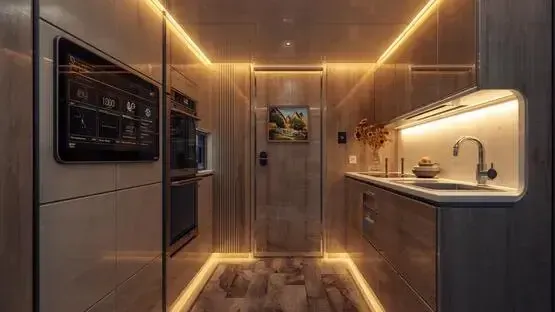
Affordability remains one of the primary drivers behind growing interest in capsule homes. In many housing markets, traditional homeownership has become increasingly difficult for first-time buyers. Construction costs continue to rise, and large homes often require substantial financial commitments. Capsule homes offer an alternative approach. By reducing building size and leveraging manufacturing efficiencies, modular units can often be produced faster and at lower cost than comparable conventional homes. This does not necessarily mean sacrificing quality. Modern capsule homes frequently include:
- Full kitchens
- Private bathrooms
- Smart home systems
- Climate control
- High-quality insulation
- Energy-efficient appliances
For many buyers, the ability to access homeownership through a smaller but highly functional living space represents an attractive proposition.
The Appeal of Off-Grid Living
Another trend supporting capsule housing is the growing interest in off-grid lifestyles. Many people are seeking greater independence from traditional infrastructure systems while reducing environmental impact and increasing self-sufficiency. Modern capsule homes can be integrated with:
- Solar energy systems
- Battery storage
- Rainwater harvesting
- Water filtration solutions
- Composting systems
- Energy-efficient technologies
These capabilities make capsule homes particularly attractive in remote locations where traditional housing development may be impractical or prohibitively expensive. The rise of remote work has further accelerated this trend. Professionals increasingly have the flexibility to live outside major urban centers while maintaining access to employment opportunities. As a result, compact off-grid housing is becoming an appealing option for individuals seeking lifestyle flexibility and environmental responsibility.
Smart Technology in Compact Homes
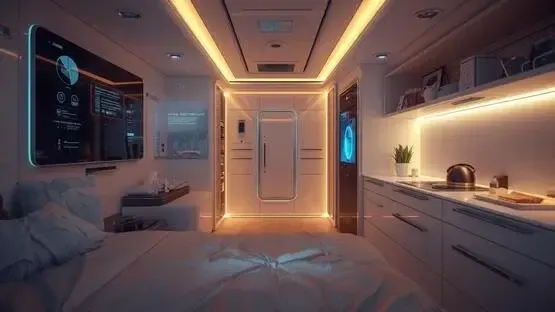
Technology plays a central role in the evolution of capsule housing. Because compact spaces require efficient management of resources and functionality, smart home systems are often integrated from the earliest design stages. Common features include:
- Intelligent lighting controls
- Smart security systems
- Climate automation
- Energy monitoring
- Remote access controls
- Voice-activated functions
These technologies improve both convenience and efficiency.
Artificial intelligence may further enhance compact housing in the future by optimizing energy consumption, monitoring maintenance requirements, and adapting living environments to occupant preferences. The combination of compact design and intelligent technology creates highly efficient living spaces that align with broader trends in smart housing.
Capsule Homes and Sustainable Development
Sustainability has become a defining priority for the global construction industry. Buildings account for a significant portion of global energy consumption and carbon emissions. Consequently, reducing the environmental impact of housing has become an important objective for governments and developers. Capsule homes support sustainability goals in several ways.
Smaller Footprints
Compact living spaces require fewer materials and consume less energy.
Efficient Manufacturing
Factory-based production reduces waste and improves resource utilization.
Lower Operational Costs
Energy-efficient systems reduce long-term resource consumption.
Renewable Energy Integration
Many capsule homes are designed to accommodate solar and other renewable technologies.
Reduced Land Impact
Smaller structures can often be developed with less disruption to natural environments.
As sustainability standards continue to evolve, these characteristics are likely to become increasingly valuable.
Tourism, Hospitality, and Short-Term Rentals
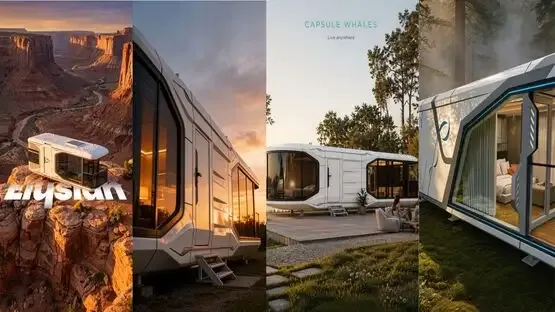
The hospitality industry has become one of the fastest-growing markets for capsule home solutions. Travelers increasingly seek unique accommodation experiences that combine comfort, design, and connection with nature. Capsule units are now being used for:
- Eco-resorts
- Glamping developments
- Boutique hospitality projects
- Nature retreats
- Remote tourism destinations
For operators, modular construction offers significant advantages. Accommodation capacity can often be expanded more quickly than with traditional construction methods. Units can also be relocated or reconfigured as business requirements change. This flexibility is particularly valuable in rapidly evolving tourism markets.
The Rise of Smart Communities
Housing trends are increasingly moving beyond individual homes and toward integrated community concepts. Developers are exploring modular neighborhoods composed of interconnected capsule homes supported by shared amenities and infrastructure. These communities may include:
- Shared workspaces
- Recreational facilities
- Renewable energy networks
- Community gardens
- Mobility solutions
- Digital infrastructure
Such developments align with broader trends toward sustainable urban planning and resource efficiency. Rather than focusing solely on private living space, future housing models may emphasize community-oriented lifestyles supported by smart infrastructure.
Challenges Facing Capsule Housing
Despite their growing popularity, capsule homes are not without challenges.
Several obstacles continue to affect widespread adoption.
Regulatory Barriers
Building codes and zoning regulations often lag behind emerging housing technologies.
Consumer Perception
Some buyers remain hesitant about smaller living spaces.
Financing Limitations
Mortgage and financing frameworks may not always accommodate non-traditional housing models.
Infrastructure Requirements
Even modular housing developments require utilities, transportation access, and supporting services.
Market Education
Many consumers are still unfamiliar with the benefits and capabilities of modern capsule homes.
As the sector matures, many of these challenges are expected to become less significant.
What Investors and Developers Are Watching
Investors increasingly view modular housing as a potentially significant growth sector. Several factors are attracting attention:
- Growing housing demand
- Construction labor shortages
- Sustainability requirements
- Rising urbanization
- Technological innovation
- Demand for alternative accommodation models
Companies focused on modular and capsule housing are attracting interest because they address multiple market challenges simultaneously. Developers are particularly interested in construction methods that improve efficiency while maintaining design quality and regulatory compliance. As housing pressures continue to intensify globally, investment in modular housing technologies is likely to expand further.
Future Outlook for Modular Living
The future of housing is unlikely to be defined by a single solution. Instead, a diverse ecosystem of housing options will emerge to address different needs, budgets, and lifestyles. Within that ecosystem, capsule homes are positioned to play an increasingly important role. Advances in manufacturing, automation, sustainability technologies, and smart systems will continue to improve the performance and appeal of modular housing. Companies such as Capsule Whales represent a growing segment of innovators exploring how compact, prefabricated, and technologically advanced housing can respond to modern challenges. As consumer preferences evolve and housing affordability remains a critical issue, modular living solutions may become a common feature of residential development worldwide.
The rise of capsule homes reflects broader changes occurring across housing markets around the world. Affordability concerns, sustainability goals, technological innovation, and changing lifestyle preferences are all contributing to demand for more efficient living solutions. Far from being a temporary trend, capsule homes represent a practical response to some of the most pressing housing challenges of the twenty-first century. By combining modular construction, smart technology, sustainability, and design innovation, these compact dwellings are helping redefine what modern housing can be. As the industry continues to mature, capsule homes are likely to move from the margins of the housing market toward the mainstream, becoming an increasingly important part of the future built environment.